Patterns – featured on Cast of Wonders

Patterns is a short story that arose as part of a group writing exercise. The writing prompt was ‘and she looked at me again.’ The phrase conjured an image of a teenage boy watching his girlfriend walking away from him. As she reached the exit of the school hall she turned to look back at him.  There was such a strong connection between these two characters that I had to discover who they were and what had brought them together. Thus, Kate and Mikey walked into my head and onto the page.

As it turned out, the bond between Kate and Mikey could not be broken by the mystery lurking at the bottom of the archaeological dig at the bottom of the school playing field: the place all the kids have nicknamed ‘The Pit’.

You can listen to this story on the Cast of Wonders website (a YA audio magazine).

Enjoy!

Self-sufficiency on Mars: Synthetic Biology holds the key

Mars is topical at the moment. In response I looked at the feasibility of building a self-sustaining human colony on the Red Planet. See my article featured on Astronaut.com, a website where Science Fiction meets Science Fact.

Astronaut.com: Science Fiction to Reality

asteroid-miningA great website with lots to offer. As a guest blogger I have an article: Developing an off planet mining industry, which looks at the increasing pressure on Earth’s natural resources, and the economic pressure driving private industry’s race to gather the bounty of space.

Home Rock

ImageThrough his link with Tara he knows she is close to Home Rock, but he is closer. He’s crouched within twenty strides of the fist of granite that marks the start and finish point of the game. The urge to throw off his concealment and make a dash for it is almost overwhelming. Alden’s legs tremble with the need to win. Let me beat him. Just once. Please.

They’ve been playing Hide and Hunt for two hours, and already four teams have been captured by the Hunter. At dawn twelve Prey, split into teams of two, had spread out from Home Rock and concealed themselves within the forest. A mixed bunch of nine to twelve year old boys and girls, all keen to claim the honour of defeating the Hunter. Now only Tara’s and Mika’s teams are left.

Tara’s words whisper in his mind. ‘This is our chance. I’m going to make the run.’

‘Wait. We don’t know where the Hunter is.’

‘C’mon Alden, we can win this!’

Her excitement is infectious. Alden grins, maybe she’s right. ‘I’m closer. I’ll do it.’

Home Rock sits at the centre of a broad circular clearing surrounded by dense forest –– all they have to do is touch Home Rock to win. Only Prey are allowed to set foot inside the clearing, but the Hunter can strike from a distance. And this time the Hunter is his brother, Zand.

‘I’m the fastest.’ Exasperation stripes Tara’s words. She’s three years older than Alden, with two wins to her credit; one more win and she’ll be promoted to Hunter. Her tone softens. ‘Get ready to distract and defend.’

Tara sprints like a deer flushed from cover. In five thundering heartbeats she covers more than half the distance to Home Rock. Alden wants to yell with excitement. The edge of the tykae strike catches his shoulder and knocks him aside. He flings up a defensive barrier even as his mind cries a warning, but he’s too slow. The force of the strike lifts Tara into the air before sending her sprawling face down on the rough, pebble strewn ground.

A sharp barking laugh cuts the sudden silence. Zand steps out of green shadow into the sunlight dappled edge of the clearing: a tall stringy adolescent, snow-white hair coming loose from the single braid down his back, lips curled in a confident sneer.

‘Come out. Come out. Wherever you are.’

The sound of his voice is like a slap. Alden drops to his belly, heart hammering. Over the years Alden has perfected the art of concealment, an act of simple survival when growing up with an older brother like Zand. He feels Zand’s scan slipstream over his defensive shield and skip beyond his position. His brother’s curse sounds close. The air snaps with vicious anticipation.

Alden knows that the best tactic is to abandon Tara, circle round and wait it out. He might get another opportunity when Mika’s team make their run: only one member of a team has to reach Home Rock to win. It’s what Tara would do. But he can’t move. He’s transfixed by Tara’s struggle to rise –– blood darkens one side of her face; thick, slow motion drops spatter the ground as she raises her head and rolls onto her side. She doesn’t try to touch his mind; she knows that Zand can use an active link to backtrack Alden’s location. She starts to push herself up into a sitting position.

‘Last chance,’ Zand says, too loud in the green-gold stillness.

Zand has that look on his face. Alden wants to run but the familiar paralysis takes hold, leaving him helpless. Tara yelps as Zand yanks her towards him, her ankles bound in a savage tykae grip. It’s against the rules to use excessive force to subdue the Prey, but Zand doesn’t care about the rules. He just cares about winning.

His brother gives the tree line one last raking look, and then leans over to place his hand on Tara’s scratched and bleeding leg. Skin to skin contact, that’s all Zand needs to inflict his punishments. Alden knows what comes next; his body trembles with remembered agony.

All choices flee when Tara begins to scream.

Alden cowers under the bushes, his head buried in his arms, trying to block out the sounds tearing the air. He can almost feel the delicate tendrils of tykae energy piercing his body. Zand is laughing, the way he does when he’s got his little brother trapped and thrashing at his feet.

Silence –– broken by Tara’s wracking sobs. Alden peers through the bushes. Tara is curled into a ball, her body shuddering with the absence of Zand’s touch.

‘What’s it to be, noik? You or the girl?’

Alden’s heart is pounding so hard it hurts. Tara hands scrabble weakly at the pebbles as she tries to crawl away. Her whimpered ‘please’ stops his breath. Zand kicks at her until she stops.

White fury uncurls inside Alden; he steps into the clearing.

‘I knew it.’ Zand’s face twists with disgust. ‘Weak. Useless.’ He stabs a finger at Alden. ‘You should’ve run or stayed hidden. You might still have had a chance to get past me.’

Alden weaves his outrage into the lattice of his defensive shield. At least Tara is quiet now. Zand’s tykae strike sends him staggering backwards, but he keeps his feet and his silence, knowing that both will infuriate his brother. Zand never stops until you beg, and sometimes not even then. Alden can sense the confusion behind Zand’s rage as his brother skirts the edge of the clearing, closing the distance between them.

‘Give it up, little brother.’

Alden tightens his shield, and his fists.

Alden knows that Mika’s team is still out there; if he can distract his brother for long enough they might have a chance. Alden doesn’t want to win anymore. He just wants Zand to lose.

And then Tara slaps her bloodied palm against Home Rock.

END

Cast of Wonders

I’ve just had a short story accepted by Cast of Wonders, a YA Audio magazine. Check out their website, I’m impressed by the quality of provision for the 12 to 17 year old market.

NeXus—mankind gets an upgrade

Ramez Naam – Angry Robot

Nexus-144dpiThis book is set in the near future and looks at the impact of nanotechnology, specifically its ability to engender a form of telepathy in humans—the ability to link minds. As with all step-ups in technology, the impact of the drug Nexus has a multiplicity of possible benefits and opportunities for misuse—implications that the author brings to the fore through the struggles of Kaden Lane, the main protagonist.

Kaden is a young researcher who has redesigned Nexus—an illegal drug—to allow the drug’s nanostructures to be pre-programmed. The book opens with Kaden carrying out a field trial of the ‘Don Juan’ protocol. The ‘Don Juan’ protocol analyses his interactions with a young woman and controls his responses, changing a shy and diffident young man into a confident, smooth operator.

The T S Eliot Prize

As a novice in the world of poetry I attended the Shortlist Readings of the T S Eliot Prize with a sense of excited anticipation. The event was well organised and ran very smoothly, and I have to say that in the person of eight out of ten poets (rather like ‘eight out of ten cat owners’) my expectations were fully met and in several cases exceeded.

Nothing can really match an accomplished poet reading his/her own work. They were, without exception, consummate performers. The Festival Hall housed an audience of around two thousand who listened in silent awe to each poet deliver a sample of the best of their work this year.

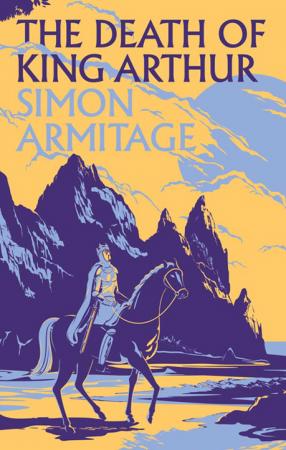
ImageSimon Armitage gave a witty introduction to his reading, speculating on ‘what can I do to win this year?’—his last collection Seeing Stars was shortlisted in 2010. He read a section of his contemporary retelling of the four thousand line alliterative Morte Arthure (The Death of King Arthur). I enjoyed it much more that I expected to. His writing has certainly caught my attention, and I shall be looking back at  his previous works with more than a little interest. I have also been reliably informed that he is a speaker well worth listening to.

Paul Farley gave a very entertaining reading of several of his poems from The dark filmDark Film, waving airily in what he thought might be the direction of the Royal Box, glasses perched precariously on the tip of his nose. His last poem finished with the declaration: ‘Oh fuck! I’m the queen.’

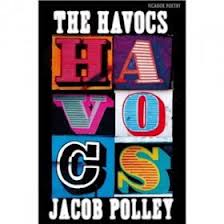
havocsJacob Polley topped them all with his rendition of ‘Langly Lane’ from The Havocs. He was the only poet to receive spontaneous applause after reading his first poem. His book is now in my hands and I’m happy to say the rest of his work is of the same wonderfully high standard.

He should have won.

‘The Chemistry Between Us—love, sex, and the science of attraction’ Larry Young, PhD and Brian Alexander

ImageThis is an engaging book that addresses questions such as:

  • How does love begin?
  • What drives mothers to care for their babies?
  • What accounts for the gender of the people at whom we aim our affection?
  • What does it mean to say one is male or female?

The book is based on rigorous research using data from both animal and human subjects. It has been written to be accessible to a non-scientific reader. In order to build and develop the theoretical arguments to address the above questions, Young and Alexander describe and explain the significance of the experiments carried out—some readers may find this aspect of the book disturbing.

Young and Alexander manage to convey complex theory in a clear and concise manner. Effective use is made of wry humour to lighten what could be quite dense material. Diagrams are occasionally used to help clarify particular issues, though on a personal note I have to admit that I did occasionally skip over some of the more technical terms.

‘Mindstar Rising’ by Peter F. Hamilton

The cover of the 17th November 2012 edition of New Scientist headlined:

CLIMATE CHANGE

Five years ago we feared the worst. But it’s looking even worse than that.

It seems that the climate models were wrong. The rate-of-loss of arctic ice, the increase in rainfall intensity, and the searing heat waves have already reached the levels that were predicted for the end of this century. As I read the dire warnings of more extreme weather in the northern hemisphere, the current and expected fall in crop yields in the UK due to heavy rainfall, the need to develop heat-tolerant crop varieties, and the likely flooding of many low-lying cities—the world created by Peter F. Hamilton in the Greg Mandel trilogy came to mind.

ImageHamilton’s first novel, Mindstar Rising, is set in England, where global warming has reshaped the physical, social and economic state of the country. Note that I said England; political chaos and industrial collapse have resulted in Wales and Scotland existing as separate political and economic entities. In the novel, massive flooding created a huge refugee problem, necessitating the requisition of buildings (shops, hotels etc.) under the government’s ‘one home policy’ to provide emergency housing. This re-imagined England has spent the past twelve years sweltering under bright hot skies, with high humidity and an annual rainy season. Most of the familiar plants and trees are gone, replaced by more tropical varieties. Low lying areas used for farming have been reduced to mud-clogged marshlands and bogs, and every available green space has been appropriated for raising crops.

Peterborough is the new industrial capital—referred to in the book as the new Hong Kong. ‘If you can’t get it in Peterborough, you can’t get it anywhere.’

Photos added to writing pieces

Just a quick note to highlight the photos added to illustrate my flash fiction, short story and book excerpt.